
The priorities are changing. Who is building - and funding - your artist’s future?

TL;DR
A&R investment does not automatically mean artist development.
Management needs a continuing strategy beyond campaign budgets.
Sound Effects helps build that strategy and assemble the support. Labels should be part of the funding conversation.
Managers regularly tell us they no longer receive the support, experience or expertise they once expected from their labels.
Having led Insight & Strategy globally at Warner Music Group, I take that seriously. Yes, brilliant people remain inside labels, but removing experienced people removes knowledge, relationships and capacity. But those responsibilities don’t disappear with the salaries.
Excel Umeh’s recent post questions whether leaner teams can deliver without losing what made them effective.
Warner’s July 2025 restructuring targeted $300 million in annual savings, including approximately $170 million from headcount reductions. Universal is pursuing €250 million in annual savings, with further departures reported in October.
Yet we keep hearing about investment in A&R.
But hold on. Investment in what, exactly?
Kyncl’s July memo included off-roster catalogue and publishing within its A&R investment framework. Buying established rights and funding an artist through years of uncertainty are different commercial decisions. So, as I argued in When Music Labels Become Investment Funds, managers must examine the priorities behind the language.
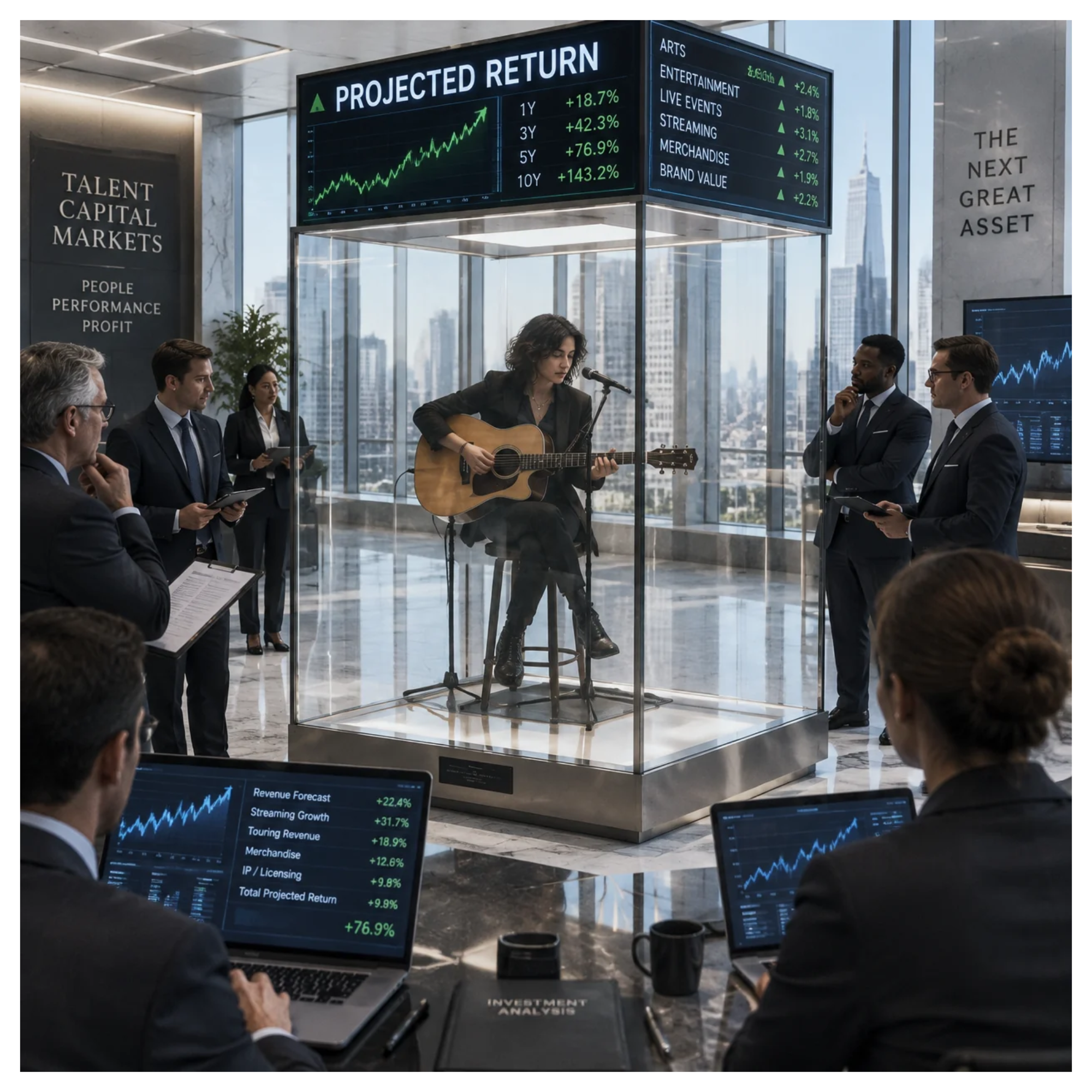
more asset management company, than music company
My reading is that the centre of gravity is shifting towards acquiring demonstrated value, with more early development work and risk sitting outside the majors. Development hasn’t disappeared. Managers simply cannot afford to mistake an A&R investment announcement for a commitment to do that work for them.
This commercial choice may be entirely rational for the senior management and shareholders of a major. But what makes sense for a record company’s investment portfolio does not automatically provide a strategy for an artist’s career, or sustain the wider music business that develops tomorrow’s talent.
If the priority is acquiring value somebody else has created, who funds the uncertain years? Who develops the artist, builds the audience and carries the risk before there is an attractive asset to buy?

“Yet we keep hearing about investment in A&R. “
Managers need answers to three questions.
1. What is actually committed? Establish which people, expertise, budget and time your label will provide. Identify what remains your responsibility and how you will deliver it.
2. Who owns the continuing plan? What sustains the career between campaign cycles? Who understands why fans care, reconnects with lapsed fans, attracts new ones and develops income beyond the next release? An artist’s future cannot depend on waiting for the next campaign cycle.
3. Who pays for the gaps? Taking responsibility doesn’t mean management must absorb every cost. Cost reductions are a reason to challenge investment priorities. Bring your label a specific proposal: the missing capability, what it costs, who delivers it and how both parties benefit. Ask them to help fund it.
There is an exciting opportunity here to take greater control, build lasting fan relationships and get more from your partners.
At Sound Effects, we help managers develop the strategy, identify missing capabilities and assemble the appropriate team, tools and partners.
We help you understand who your fans are, why they care, what could bring lapsed fans back and what could attract new ones. Through the Superfan Engine, we turn that understanding into opportunities for participation, advocacy and growth. We identify revenue opportunities rooted in what fans value and bring together the expertise to put the strategy into practice.
Your label has its priorities. Your artist needs a continuing plan of their own.