The World Cup reminds us that passion is powerful. But it is also layered, contradictory, personal, and too often misunderstood by sport and music alike.
The picture below is of me in Nashville after roughly 24 hours without sleep, having flown in from LA, straight to the office. It eventually became about 39 hours without sleep.
The night ended with dinner with John Oates, the Oates bit of Hall & Oates, or at least for a while I wasn’t sure if it was John Oates, because by that point I may well have been hallucinating. When I saw him again in Nashville a couple of months later, he kindly assured me that it had, in fact, happened. He reminded me that we also went to see Jason Mraz at The Ryman, (points to anyone who can tell me what The Ryman is famous for).

Nashville after roughly 24 hours without sleep,
So why am I telling this story, aside from the gratuitous name-drop and the not-so-subtle implication that I regularly rub shoulders with 80s music legends around the world? Well, many of us on this side of the pond will be feeling something similar this morning - sleep deprived. Slightly broken. A little emotional. Possibly over-caffeinated - all because of a football match taking place on the other side of the pond, in the early hours of the morning.
England. Mexico. World Cup knockout football.
Jude. Kane. Pickford. Nerves shredded. Sleep abandoned. Work productivity quietly destroyed. Why do we do these things? PASSION.
That is the obvious answer. But it is also the answer that, too often, we flatten until it becomes meaningless.
Music has been a lifelong passion for me. An obsession. A source of identity, connection, memory, friendship, escape, work, meaning and, if I’m honest, occasional madness. The privilege of working in and around music has never once deserted me. Frankly, I could have earned more money outside music than in it. In some periods, I did. But during those 39 hours in Nashville, it never really occurred to me that I was “doing a job”. Passion kept me going. Passion, and black coffee.
But here is the important bit: passion is not a one-dimensional constant.
Now, Football is not my favourite sport. It is not even my favourite ball game. I prefer the one with the funny-shaped ball, the one that spends most of the time being carried, and where the only extra equipment the players really need is a gumshield. And yet there I was, like millions of others, drawn back in.
Not because football occupies the same place in my life that music does. Not because I follow every club, every fixture, every tactical shift, every transfer rumour. I don’t. My interest in the club game is usually dependent on whether my team (Ipswich Town) has been promoted into the Premier League, is threatening to be relegated from the Premier League, or is generally finding new and inventive ways to disappoint me.
And yet the World Cup does something extraordinary. It reminds us that passion is rarely clean or simple.
It can be lifelong or occasional. Deep or passing. Rational or completely irrational. Tribal, nostalgic, social, cultural, national, personal, inherited, performative, private or public. It can be full of love, but also full of barriers. It can be built on joy, frustration, resentment, habit, identity, hope and contradiction. That is where sport and music so often make the same mistake.
We know passion is powerful. We know it is a connection point. We know it can be a commercial hook. But then we behave as if all passion is the same, and as if all passionate people should be addressed in the same way. They shouldn’t.
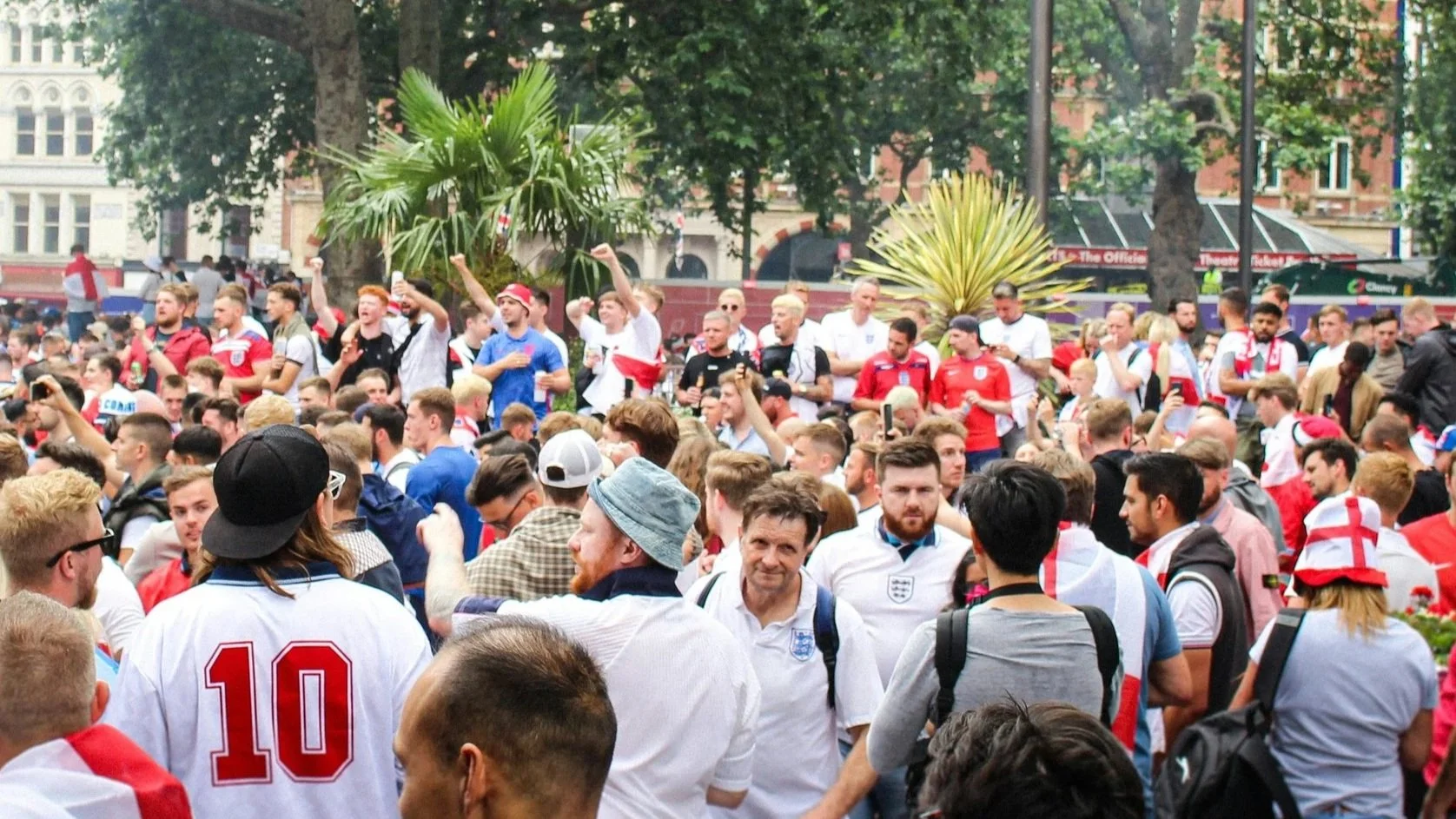
A lifelong season-ticket holder is not the same as someone who only comes alive for the World Cup. A teenager discovering an artist through a clip is not the same as someone who bought the first album on release day. A casual fan, a returning fan, a lapsed fan, a superfan, a collector, a social follower, a gig-goer, a parent passing music on to their children, a nostalgic fan, a new convert, these are not just different levels of the same thing. They are different emotional states.
Different motivations
Different opportunities
Different relationships
Different needs
And therefore, they require different strategies.
This is where I think both sport and music often get the idea of fandom wrong. We have become slightly obsessed with the one-dimensional idea of the “superfan”, and, too often, the commercial question becomes: how do we extract more value from the people who already care the most?
But revenue is only one part of the opportunity.
Moments like a World Cup show us something much bigger. They bring the whole fan ecosystem into view. The die-hards are there, of course. But so are the casuals, the returners, the children watching properly for the first time, the people pulled in by family, nation, nostalgia, jeopardy, story, social energy and shared emotion.
All the ingredients of the club game are present in a World Cup. The task is not simply to enjoy the spike and then watch it disappear. The task is to understand how to move people through the relationship: from new interest to casual engagement, from casual engagement to regular attention, from regular attention to deeper commitment.
And, just as importantly, to understand the role superfans can play in that process.
Because the real value of a superfan is not simply that they might spend more. It is that they can help create reach, meaning, credibility and connection. They can carry the story further than any campaign. They can make the unfamiliar feel accessible. They can help new fans find their way in.
That is what is so often missing from the ideology of “superserving the superfan”. It treats superfans as the end point. In reality, they should also be one of the most powerful starting points.

The World Cup is a perfect example. Every four years, football gets handed a vast new wave of attention. People who don't normally care suddenly care. People who drifted away drift back. People who say they're not really football fans (like me) find themselves staying up until 4.45am, living every minute as if they have always been part of it. That is not fake passion. It is different passion. And different passion needs to be understood before it can be developed.
The same is true in music. Too much of the industry still treats fans as either a database, a ticket buyer, a stream, a follower, a transaction or a target. Sport often makes the same error, just with more expensive “fan engagement” technology layered on top.
In both cases, the mistake is the same: confusing measurement with understanding.
Knowing that someone turned up, clicked, streamed, watched, bought or followed tells you something. But it does not tell you...
Why?
What they felt?
What stopped them coming sooner?
What would make them come back?
What they would tell their friends?
It doesn’t tell you whether this is a passing spark, a dormant relationship, or the beginning of something much deeper. And that is the work.
To observe. To interrogate. To unpick the emotional, historic, practical, cultural and personal layers that sit beneath behaviour.
Because when you understand those layers, you can help a sport, a club, an artist, a rights holder or a brand grow in ways that are more durable, more respectful and more commercially powerful.
Growth in reach
Growth in engagement
Growth in relationship
Growth in revenue
But growth built on foundations, not just spikes.
Perhaps I am saying this because I am sleep deprived. Perhaps because I am feeling a little emotional and delicate. But Sound Effects, and tools like our Superfan Engine, have been built on this exact foundation: passion, love, adoration and occasionally full-blown mania for music, culture, fans and the people who make all of it matter.
But passion alone is not enough. It needs structure. It needs insight. It needs strategy. Because passion is not one thing. It’s many-layered, divergent, contradictory, subtle and uniquely personal.
And the organisations that understand that, in sport, in music, in entertainment and in culture, will be the ones that stop treating fans as a single audience and start building real relationships with real people.
Even the ones watching football at 4am. Even the ones who swear football is not really their favourite sport. Even the ones who, 39 hours into no sleep, are fairly sure they had dinner with John Oates.
Finally, to my Mexican family: les mando un abrazo fuerte. De verdad, this was not the fixture I wanted. Love and commiserations.