
THE GUARDIAN EXPOSED THE TACTIC. ARTISTS & MANAGERS NEED TO UNDERSTAND THE RISK.
The Guardian recently published a fascinating, uncomfortable and very useful article about fake fans, cynical viral campaigns and agencies “confecting social media buzz” around artists.
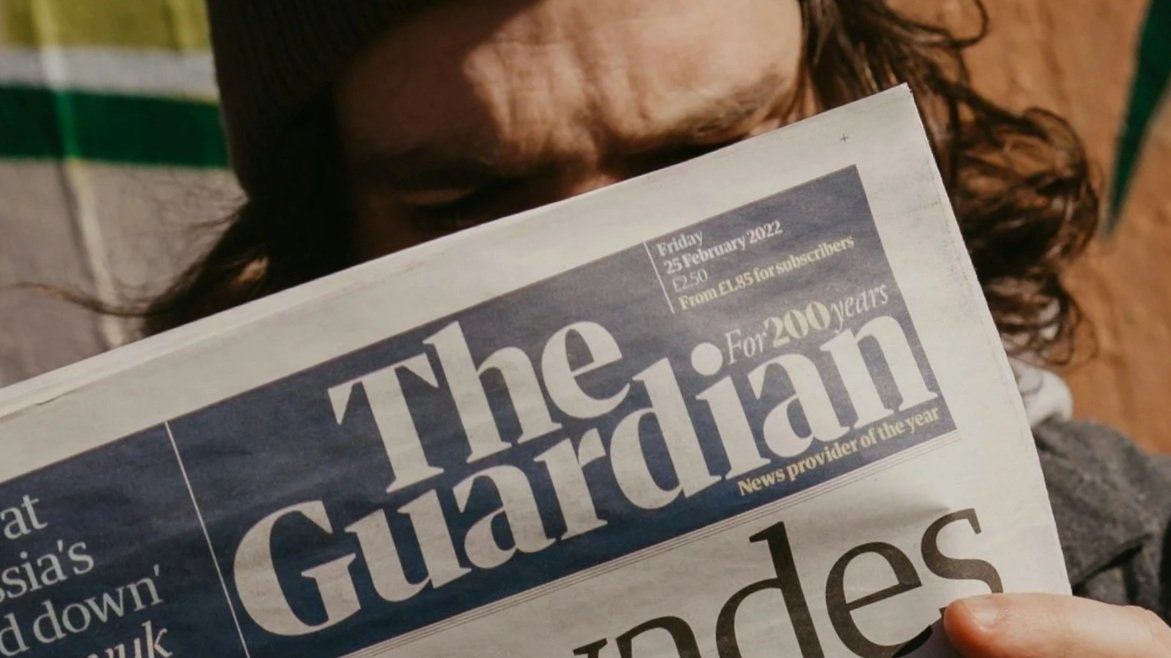
Artists and managers should read it carefully, not because it proves marketing exists. Fans know artists are marketed. They understand campaigns exist. They're not idiots. But the issue is more serious, because it’s when marketing starts pretending to be fan culture.
Fake fan pages
Seeded narratives
Paid creator activity dressed up as organic excitement
Artificial discourse designed to make an artist look more culturally inevitable than they really are.
And yes, you know what I’m going to say next…this is not fan strategy. No, this is artificially simulated momentum, a very weak foundation on which to build an artist career. But hey, the appeal, of course, is obvious.
It's relatively cheap
It's visible
It creates screenshots
It gives the label something to point at
It makes the campaign feel alive
The Guardian cited one package at around £1,490 per month with a nine-month minimum. In label budget terms, that is not huge, which is probably part of the problem. It’s cheap enough to buy without enough strategic scrutiny, and visible enough to create the comforting illusion that something is happening.
A senior label marketer recently described this type of activity to me as “a short-term sugar rush”. A spike of noise, the feeling of movement, some shiny screenshots…but then…it just dies away. Because nothing has really been built.
No deeper fan relationship
No owned audience
No strategic insight
No long-term growth engine
No greater understanding of why people care.
It’s just smoke-and-mirrors growth - a flash-in-the-pan solution that ‘games the system’ rather than builds anything solid underneath it. And that matters because artists do not need the illusion of momentum. They need authentic, solid and defensible organic growth, at scale.
AN INDUSTRY TRYING TO ENGINEER THE SYMPTOMS OF FAN MOMENTUM
A Spike of Noise is not the Same as a Fanbase.
The Guardian article is not just a story about one agency or one band. It is a warning about a much bigger industry weakness.
Record companies are under pressure. Their commercial model has changed. Experienced in-house marketing knowledge has thinned out. Teams are being asked to do more with less. Everyone needs proof that a campaign is moving. Everyone needs to show heat. So the industry defaults to cheap, visible, short-term solutions. I mean, I suppose it’s understandable, but understandable doesn’t mean strategically wise. Because the risk isn't shared equally.
The label can move on
The agency can move on
But the artist? Well, they carry the trust damage.
In almost all cases, the Fans are not going to feel betrayed by “the marketing department”. Nope, they’ll feel betrayed by the artist. They’ll question whether the excitement was real. Whether the fan accounts were real. Whether the conversation was real. Whether the success was earned or engineered.

a fake spike of attention, quickly plunges into a crash of disinterest.
It risks one of the few assets in music that cannot simply be bought back. Trust.
The issue is not influence. Influence matters. The issue is fake influence.
The issue is not creator marketing. Done well, creator marketing can be useful.
The issue is marketing pretending to be fan culture.
Because real fan culture is not just distribution. It is meaning, identity, belonging, credibility, advocacy and emotional ownership. When that gets faked, the damage can be disproportionate. What we have is an industry trying to engineer the symptoms of fan momentum without understanding the causes.
A fake fan account can post three times a day
A creator can be paid to use a track
A narrative can be seeded
A comment section can be nudged
But none of that answers the questions that actually build careers.
Who genuinely cares?
Why do they care?
What role does this artist play in their life?
What are the ‘artist truths’ that connect?
Which fans are emotionally invested, not just passively aware?
Which audiences are adjacent but reachable?
Who has the motivation and credibility to carry the artist into new communities?
Those are not a bunch of airy-fairy, tree-hugging questions, no, they’re solid commercial questions. Because trust, belief, identity, belonging and advocacy are the foundations to the value everyone eventually tries to take credit for, package up and monetise.
IF THE ANSWER IS F*** ALL, YOU HAVEN’T BUILT GROWTH. YOU’VE RENTED NOISE.
So, this is where artists and managers need to be careful, because the question isn't whether a tactic creates activity this week, but what remains when the activity stops. If the answer is f*** all, you haven’t built growth. You’ve rented noise.
How To Be More Efficient. How To Be More Effective..For Longer.
At Sound Effects, through the Superfan Engine, we approach the problem differently. The last thing we’re looking to do is 'game the system'. We are trying to help artists, managers, rights-holders and sports organisations build a better one.
Superfan Engine uniquely combines attitudinal fan insight, strategic foundation and tactical implementation. Not as separate exercises, but as one connected system: understand the fan, build the strategy, then activate real people and communities in ways that compound. Authentically.
Amazingly, it is not dramatically more expensive than some of these flash-in-the-pan solutions. But what it leaves behind is fundamentally different: reusable fan understanding, owned audience intelligence, two-way audience relationships, strategic clarity, authentic activation and a stronger foundation for future growth.
That is the point. In a future edition, we’ll come back to the uncomfortable truth that proper fan understanding costs more than cheap tactical noise. Of course it f*ing does, because it actually builds something of value!
And artist careers should not be built on shifting sands.
The future is not better fake virality. It is better fan truth.